Showing posts with label Classics. Show all posts

Monday, 22 January 2018

Mary Shelley’s Frankenstein at 200 3D Review


Frankenstein and his monster both turn 200 this month, and by way of celebration we at SOBS running a week Frankenstein posts. Over the week we’ll be posting reviews –an adult review and one by a teen. Plus running an article on the cultural legacy of Shelley’s creation and how it has manged to evolve and say relevant through the last two centuries. We’ll finish up with some Frankenstein inspires story sacks, for younger children and young adults. So first up, let’s start with the reviews.
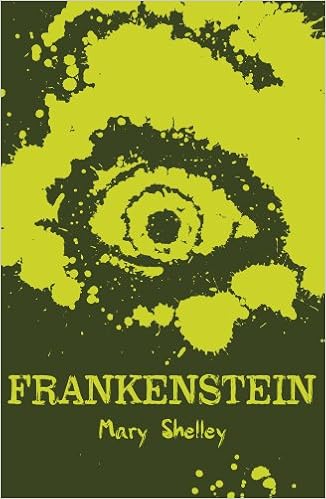
Image result for frankenstein bookFrankenstein Review by Bea aged 13

Captain Robert Walton was trying to reach the North Pole, when he met Victor Frankenstein: The Creator.

Frankenstein, ill from the terrible cold, has been welcomed upon Walton’s ship where he reveals his past and the story of ‘The Monster.’ Frankenstein shows his private world of creating the creature and shows how his mistakes had led to him to be sick with worry, for how had he let his masterpiece escape? After endless search and disastrous help, he reveals word of his brother, William, who had been murdered!

More crimes committed towards his family, forced him to face his creation, but The Monster reveals that there is more to him than meets the eye. Is everything Victor hears true? Or is this even the Monsters real story, and why does he end up in the North Pole almost dead?

Frankenstein is a fantastic book full of creative twists and turns written by the young author Mary Shelley. Brilliant old English, that starts off tough but pushes you into the story and will never let you out. I couldn’t put it down and thought it was one of the best books I have ever read!


Frankenstein Review Adult

Reading a classic for the first time is always a peculiar thing, which I approach with a certain amount of trepidation, I am always concerned whether it will meet my expectations, after all it is a classic - a story I know. One I was weaned on by numerous adaptations, reimagining’s or the transportation of key characters into other worlds, literary or on screen.

However when reading the original I released that despite having encountered Frankenstein and his monster before in many guises, none of them capture the essences of Mary Shelley’s original text – like a Xerox copy that has been copied again and again, they fade losing details and potency.

Frankenstein or The Modern Prometheus is still fresh, relevant engaging and beautiful. To start with though a tip: persevere through part one – initially it seems unrelated and hard going, but stick with it for you will be rewarded! The first part of the book comprises of four letters written by explorer R Walton to his beloved sister as he attempts to be the first man to battle the elements to reach the North Pole. These letters at first reading seem out of place and unrelated to the main plot as through his letter you are exposed to the interworking’s of a deeply flawed man’s mind, who’s singularly obsessed with no concern for the fate of anyone around him as he leads them towards a very cold painful demise. But when you get to letter four the story comes to life and pace changes with the first glimpse of the monster and the staving, battered Victor Frankenstein is pulled from the icy waters. From here on out we get the story we expect as Frankenstein recounts his tale as warning to Walton about his ambitions and vanity.

Victor from his deathbed tells of his obsession with science, alchemy, mortality and his crowning achievement and biggest regret creating the monster, which comes surprising early in the book, much earlier than I expected having ‘known the story already from films!’ But I was also presented by other surprise the complex feelings experienced by Frankenstein leading him to shun his creation, resulting in a deathly dance between monster and creator. I had always assumed that Victor himself was always only guilty for creating the monster not moulding him too.
Shelley explores the intimacy of the relationship between father and neglected son. With the damaged son’s violence escalating as he desperately seeks for his father attention and love. This can also be read as a parable of religion. But what is so fascinating about reading Shelley’s original text is it’s commentary on society. These messages are frequently lost in translation when the story is adapted and made to fit nicely in a genre pigeon hole. The mirroring of the not too distant history (at the time on writing) of the French Revolution; in the book Frankenstein being France, Walton Great Briton and the Monster is the starving masses ignored by ruling classes that eventually respond in kind.

The science in Frankenstein are equally as fascinating especially if you think at the time it was cutting edge; electricity was still in its infancy, and the same year as the book was published the first attempted blood transition took place in London. Shelley was writing about new frontiers but she was commenting on the oldest of human concerns, cheating mortality with Frankenstein’s obsession with modern sciences, ancient alchemist, to control death in a godly image. This human concern is one that is eternal, just look at two of last year Sci-Fi blockbusters, Ghost in A Shell and Blade Runner 2049 which are both essentially Frankenstein for the 21st century, proving Shelley’s story has an enduring relevance.

Another surprise that the books presented was Shelley’s beautiful penmanship, for example when Victor travels throughout the story, the geography and landscaped are all exquisitely visualised, reading more like a travel diary in the likes of Victorian Explorer Mary Kingsley.

All in all, Frankenstein has superseded all my expectations; it is a beautifully crafted, multi-faceted masterpiece that broke moulds and arguably birthed an entire genre – science fiction. It is definitely worth reading for advance mature middle grade readers, young adults and beyond. 

Thank you for stopping by and reading, please come back for more Frankenstein post during the week.


Saturday, 28 November 2015

150 Years of Alice in Wonderland - Review - The Looking-Glass Girl by Cathy Cassidy


Continuing our celebration of the 150th Anniversary since Alice in Wonderland was released, Nicki reviews Cathy Cassidy's Wonderland Inspired new book...


Some of the themes familiar from ‘Alice in Wonderland’ take on a nightmarish tone in Cathy Cassidy’s ‘The Looking-Glass Girl,’ written in celebration of 150 years of Lewis Carroll’s timeless classic.

Cathy Cassidy is one of our best-loved authors, cherished for her family stories of friendship and light teen romantic fiction. So it’s a departure and a move into new territory that ‘The Looking-Glass Girl’ takes on a thriller tone right from the start.

Alice has been increasingly isolated since her best-friends from primary have moved into a much ‘cooler’ set at secondary school. So when she gets invited to a sleepover with them she is not sure whether to be pleased or concerned – a feeling many girls of this age will easily relate to.

What does the night have in store? Is there some other motivation for inviting her along? What will they being doing and will she be ‘cool’ and grown-up enough?

From when she arrives at the Wonderland-themed party, everything from costumes and the painted faces of the other guests is unsettling. The drink is served in a teapot that Alice suspects is spiked with alcohol, Alice knows she is out of her depth, but desperate to be included.

She has to tread as carefully as her namesake to work out friend from foe, but it all goes horribly wrong.

We know from the opening of the story Alice will end up in a coma, with everyone lying and covering up exactly what went on.

The tension is cranked up from unexpected arrivals at the party and a few games where Alice feels she is less of a guest, more of bait.

The arrival of a boy Alice likes ratchets up the tension as she can see clearly that one of the other girls likes him too . . .

Taut plotting means the story of what actually happened that night and what is really going on among Alice’s ‘friends’ is revealed only slowly, partly through confessions at her hospital bedside and her nightmarish dreams as she tries to find her way back from unconsciousness to the real world.


Tweens and early teens will love this fresh tale with more than a hint of threat and danger in amongst this tale of friendship and early romance. A total triumph and really true to the original tale, while being really fresh and different.


Wednesday, 25 November 2015

Happy Un-Birthday Alice – 150 Years of Wonderland and Counting! Reviews of Alice in Wonderland


The 26th of November see’s the 150th anniversary of the publication of Alice in Wonderland by Charles Lutwidge Dodgson, better known by his pen-name, Lewis Carroll. To celebrate Space on the Bookshelf are having a Wonderland Week, (and as we all be mad here, it’s not what you’d call an actual week, but when you know Time personally he doesn’t take offence!).

In the next few day’s our posts will include idea’s so you can run your own Un-Birthday Party with wonderland crafts and foods, and a review of Cathy Cassidy’s ‘Looking-Glass Girl. But to start off we are going to do a 3D review of Alice in Wonderland, (or as much as we can, with an editor and author interview quite out of the question) with a review by 11 year old Bea an adults review (by me) but with a difference. So, without further ado, hold your breath and down the rabbit hole we go…

Reviews, Alice in Wonderland by Lewis Carroll


Children’s Review by Bea aged 11

Two glowing eyes, one large smile and a very cheeky attitude it’s the Cheshire cat. Join Alice and the strange animals of wonderland as she takes a mysterious stroll trying to find her way home to a normal life. Through her magical journey Alice meets evil head chopping queens, unusual talking animals and a rabbit that’s late for an important festival. This adventure starts by a large fall through a ginormous rabbit hole but will it finish the way Alice wants it to with a blanket and a family next to a warm fire or will Alice be trapped with nasty queens and curious creatures. I like this book as its funny and has lots of cliff hangers, it is really well written and it’s just and amazing book that you will never forget. I recommend this book as I think you will enjoy it, if you like mysterious places and creatures, also this book makes you feel like you’re in the adventure and it helps you to learn the creatures’ personalities. Once you’ve picked up you can’t put it down!!!


Adults Review

It came as a surprise to me when I realised that I had never actually read Alice in Wonderland, as I know the story so well. Like many of my generation, I was practically weaned on tales of curious Alice and the mad residents of Wonderland; I played a ducked-billed platypus in a school production as a teenager, and have watched all manner of televised adaptations, from the well-known Disney animation to Tim Burton’s live action 2010 feast of a movie, and every adaption in-between (who can forget Ben Kinsley’s caterpillar?). My children have been on Alice themed floats on Village Fetes, and I’ve read about the neuroses and psychoses of the Wonderland residents in Laura James ‘Tigger on the Couch’, learning that The Queen of Hearts is suffering from Acquired Situational Narcissism.


Also as an adult, and having written a dissertation on ‘The Freudian Impact on The Loss of Innocence in Artists Representations of Children’, I’m also aware of the more sinister associations and misuses of the phase ‘Wonderland.’ So when I came to reviewing the book for this post, it became something even deeper, it became a study into reviewing a book when you already have so many preconceptions of the plot and characters. The question was in my mind, how much will all this baggage erode the enjoyment of reading the book?

Starting the book was the hardest, (as when I opened my copy, out fell some of the research from my dissertation which was disconcerting), but then sitting down and letting my mind be free to focus on the words Lewis wrote opposed to paying heed to the images in my mind was tricky. I found that comparing the text to all of the adaptations and re-writes I had seen and read was near on impossible, and was seriously impleading the reading experience. Getting past this was difficult and I struggled, taking a hideously long time to get through chapter one, but then half way through the second chapter all these struggled dissolved, lost in a Pool of Tears, when I realised that the story I know is just a mere duplication, a caricature of the original. As soon as I settled down and allowed myself to switch off my brain and just concentrate on the book, a strange thing happened; I began to enjoy the story, which is strange as I have never actually liked Alice or any of the Wonderland stories before. 


It turn out Alice, who comes out as rather pretentious and un-likable in the screen adaptations, is actually rather endearing. Yes, she is precocious BUT she is also naive and many of the clever things she think she knows, she doesn’t at all; she is just a curious child with a yearning for adventure.

“When I used to read fairy-tales, I fancied that kind of thing never happened, and now here I am I the middle of one! There ought to be a book written about me, that there ought!”

A child with a curious nature, and a willingness to eat things fully knowing that the consequence will be height altering, and to converse with anthropomorphic creatures with the least bit of concern.

“I almost wish I hadn't gone down the rabbit-hole-and yet-and yet-it’s rather curious, you know, his sort of life! I wonder what can have happened to me!”

Another welcome surprise was that despite Alice seemingly meandering around Wonderland from one adventure to the other, the book is actually fast passed and that much of the adventure is instigated by Alice herself rather than her just happening upon it. Like when she decides she wants to visit the beautiful walled garden and making it her own mission to realise that goal.

The Wonderland inhabitants also had be surprised, the lack of Tweedledum and Tweedledee for example, (who don’t appear until Alice goes Through the Looking-Glass), the leniency of the hen-pecked King of Hearts, or the Cheshire Cat who may be the most sane Wonderlander there is. Then there are the characters that I’d never heard of, like The Duchess who arguably features as much or even more than the more well-known charters like The Mad Hatter or The Cheshire Cat. I adored the Mock-Turtle and the Gryphon, especially their humorous quirky logic.

“We’re all mad here. I’m mad. You’re mad.”

With reading and reviewing this book, I discovered that many things, about the book, not least the fact that I actually enjoyed it, and found it an amusing and fascinating journey into a truly unique world, but also about myself and my traits at writing books off by judging them by their imitations, and adaptations. What I now know, is that I need to read a book before formulating an opinion about it, and that I need to embrace my inner child, and forget all of the information that I already know about a story to really appreciate it and have an enjoyable reading experience.