Showing posts with label Barrington Stoke. Show all posts

Monday, 3 September 2018

Firebird – Elizabeth Wein – Barrington Stoke – Review


People say that books are doorways into other worlds, but Historical Fiction doesn’t just open up another world, but also shines a light on parts of history that as lesser known, often forgotten entirely.

We all know about WWII, for people of my generation (I’m right on the cusp of Generation X and Millennial) we grew up amongst people that lived through it, both my grandparents on one side were in the RAF and had medals, my Gran refused to collect hers, and my granddad (twice shot down over enemy tertiary) refused to talk about it. My other grandparents worked the land and were in the Home Guard and saw action discovering a crashed German bomber. My neighbour was evacuated from London during the blitz to rural Oxfordshire, never to return.

Not only were we surrounded by people who survived the war, we were also immersed in literature about it, reading Michael Morpurgo, the Narnia series, and The Diary of Anne Frank, (even watching her father break down in tears on Blue Peter). And watching it, John Boreman’s Hope and Glory, Spielberg’s Empire of the Sun, and Goodnight Mister Tom. It’s a part of history we know well, from the troops on the front, the espionage and code breaking, to the way affected civilians in the UK, Europe and the US. Younger generations, may not be surrounded by people that were there, but they are still very well versed on the war experience from the perspective of the allied forces and nations. That is apart from Russia. Russia that fought on our side.

Russia and her people’s experiences and trials through the war have been barely mentioned, much like the German and Japanese’s experiences of the war (Grave of the Fireflies excluded). This is probably due to trust issues as a result of the Russian revolution, after all the Csar Nicholas II, the brutal execution of his children, and then the following cold War. So Historical Fiction really can expand our understanding of historical events by exploring these less written and filmed aspects of our past, and this is exactly what Elizabeth Wein has done with Firebird.

Firebird is the story of Anastasia Viktorovana , as told by her to a tribunal as she stands trial for treason. The first chapter is difficult reading, she is a true Communist, her parents were there at the beginning, fighting in the Red Army alongside Lenin, and her father drove the wagon transporting the corpses of Czar Nicholas II and his family. Anastasia known of Nastia was brought up fighting for the cause, learning to shoot a gun before she could walk. Nastia’s frank and unremorseful talk of these events are hard to read, but there is something that lies between her words that resonates deeply and demands empathy, the fact she is a loyal young girl, who fights for her beliefs but also is very loving and loyal to her family and friends.

Nastia a flight instructor for the Leningrad Youth Aeroclub, and is the only woman except for the Chief instructor. But on the advent of war, Natstia is devastated when she and her fellow instructors go to sign on for active duty, and she is the only one not accepted to fly fighters, despite her greater experience and more flight hours, the men are sent to the war, and she and Chief are left to train a procession of new male pilots. 


The Chief, a formidable woman with short cropped hair, who wears men’s clothes and does her makeup like mask, and (rumour has it) has an taste for expensive French corsets. Is the person who got Nastia her job within the Areoclub, due to her friendship with Nastia’s father. Nastia knows that the chief and her father are close friends, close enough that the Chief to have picked Nastia’s name, but she is an enigma, and Nastia knows nothing about her. All Nastia knows for sure is that her father met Chief around the time of the Csar was overthrown.

Under The Chief guidance Nastia along with a selection of other female instructors train other pilots biding their time until it the females are called on to fly fighters. The night before her first mission Nastia receives news that both her parents have died leaving the Chief as the closest thing she has to family. Loyally Nastia goes in to battle as the Chief’s wingman, but when Chief’s plane is damaged and is under fire she is left with an impossible dilemma leave Chief behind or fall back from the fight and face a treason charge.

When the fight is over Nastia learns the truth about The Chief’s identity and in doing so reveals more about her father and the notion of loyalty itself.

Firebird, really opens a doorway into an aspect of history which is not often discussed, and does so with unflinching directness, whilst empathising and bringing out the universal aspects of the human nature; that most people fight for love and loyalty. But by blurring with the lines between fact and fiction Wein has woven an ending with a twist that is both elegant and poignant that’s akin to the closing scenes of Bernardo Bertolucci's 1987 Oscar winning epic ‘the Last Emperor’. Firebird is an engaging intelligent read, and well deserves to get on the shortlist for next year’s CLIP Carnegie.


Wednesday, 11 April 2018

Rose’s Dress of Dreams - Katherine Woodfine - Mini Blog Tour & Review


Today we are delighted to welcome Katherine Woodfine to SOTB as part of her Mini Blog Tour ahead of the publication of the beautiful 'Rose's Dress of Dreams'.


Rose’s Dress of Dreams is inspired by the real life of Rose Bertin, who was born in 1747 in France. She moved to Paris at a young age, where she found work as an apprentice dressmaker.


Portrait of Rose Bertin 


Rose was ambitious and excelled at her work. She was soon promoted, and her designs became popular with the ladies of the French court. But her biggest success came when she became the favourite dressmaker of the new Queen of France, Marie Antoinette.


Portait of Marie Antoinette by Elisabeth Vigée Lebrun [https://upload.wikimedia.org/wikipedia/commons/0/00/MA-Lebrun.jpg] 


Rose’s imaginative designs helped the young queen to make a sensation. She was responsible for many of Marie Antoinette’s most iconic outfits (which continue to inspire designers to this day).


Kirsten Dunst in Sophia Coppola’s Marie Antoinette [https://www.pinterest.co.uk/pin/29695678778008167/] 


Rose even helped design Marie Antoinette’s towering hairstyles, which were often decorated with objects relating to current events - such as a ship to represent a naval battle in which the French had triumphed!


Marie Antoinette’s famous coiffure


Rose became an important figure at the Royal Court, known as the queen’s ‘Minister of Fashion’. The outfits she created set trends not only in France, but all around Europe: dolls like this one, dressed in miniature versions of her designs were sent to foreign courts to help them keep up with the latest styles.


18th century fashion doll from the V&A Collection [https://www.pinterest.co.uk/pin/25543922861356802/]


Rose opened her own shop on Rue St Honoré, which was always full of ladies of fashion who wanted to emulate the queen’s style. Today, her shop is long gone - but I couldn’t resist visiting where it had once stood on my most recent trip to Paris.


Visiting the Rue St Honoré, Paris 


Nearby was a lovely shop with a window full of pink-and-green macarons which seemed perfectly in keeping with Marie Antoinette’s wardrobe!


Delicious macarons!


Of course, the French Revolution changed everything for Rose. The glittering splendour of life at the French Court came to an end - and she soon had to leave Paris for a new life in England.


Today, she is often remembered as ‘the world’s first fashion designer’. I hope my story about how Rose’s amazing career got started will be enjoyed by young readers - who will find her passion, creativity and determination as inspiring as I do!


Dress by Rose Bertin worn by Marie Antoinette, from the Royal Ontario Museum collection [https://www.pinterest.co.uk/pin/29695678773638845/] 


For lots more pictures of Rose Bertin’s incredible creations, check out my Rose’s Dress of Dreams Pinterest board [https://www.pinterest.co.uk/followtheyellow/roses-dress-of-dreams/]


We have endeavoured to cite all photographic sources  -  Many images via Pinterest - click on the link for the source

Review - Rose’s Dress of Dream  - Katherine Woodfine & Kate Pankhurst


Rose’s Dress of Dreams, is beautiful book which celebrates those extraordinary people with imaginative minds that dare to dream different by telling the tale of Rose Bertin. Katherine Woodfine tells us the tale from Rose’s perspective as she dares to dream about frocks and gowns, drawing her designs and wishing to make fine attire for fine ladies. Young Rose undeterred by people mocking her dreams and designs both, leaves her little town for Paris where she becomes an apprentice dressmaker, where a mistaken encounter with The Princesse de Conti, gives her just the break she needs as the Princesse commissions her to make her a gown. The gown, Rose’s Dream Dress, is such a hit, she soon the most in-demand dressmaker in Paris.


With Rose’s Dress of Dreams, Katherine, has both told an engaging and delightful account of Rose’s true life achievements; her rise from humble beginning to the become histories first Fashion Designer, but also woven in a message to children, to dare to dream and to work hard and be determined to see your dreams realised. The story is enhanced with Kate Pankhurst’s beautiful illustrations. The pictures and text are a perfect pairing, given that Kate is best known for her Fantastically Great Women Who Made History and Fantastically Great Women Who Changed the World, both books about other inspiring and history changing woman just like Rose Bertin.

Rose’s Dress of Dreams is a delight, a feast for the eyes and inspiration for the mind.


Monday, 27 November 2017

Best of 2017 – Superdad’s Day Off by Phil Earle and Steve May


Another of Barrington Stokes Little Gems of 2017 is the strangely familiar tale by Phil Earle illustrated by Steve May, about a father who takes his son out for the day BUT is so tried that he can’t play or do any of the exciting things his child has planned.

You see- familiar! How often have you had a day of work but have been so tired that a DVD, trip to the cinema or indoor play area, where you can sit and sip coffee while your child is entertained – sounded appealing?

However as much as you can empathise with this story, it has one fundamental difference, and the clue is in the title – SUPERDAD’S day off. Yes, Stanley’s dad is you guessed it – a superhero – Dynamo Dan. The reason he’s sooo fatigued is that he is busy twenty four hours a day saving the world. So when father and son go for a say trip to the park and disasters ensue, Stanley steps leaving his Dad to recharge his batteries. Stanley endeavours don’t go unnoticed and soon both he and his Dad are both adorning capes and protecting the world - together.


Superdad’s Day Off is one of the best of 2017, as it takes an all-too-familiar situation and twists it into a fun and family centric story, with lovely messages of empathy and love as son supports parent. The illustration by Steve May are vibrant and funny working beautifully with the text. The book is further enhanced by the activities at the end of the book and lovely dedication with a photograph of Phil Earle’s own Marvellous Mini -Superhero!


Monday, 20 November 2017

Best of 2017 - Nellie Choc-Ice Penguin Explorer by Jeremy Strong and Jamie Smith


Black Friday is almost upon us, the nights are longer and the season colder. Everywhere you look there is Christmas decorations and fake snow, which is a good place to start the next Best of 2017 review of the fabulous, Nellie Choc-Ice by Jeremy Strong and Jamie Smith.

Nellie Choc-Ice Penguin Explorer is one of Barrington Stokes’s Little Gems, and it is just that, it’s a frosty, funny, fast adventure about a feisty penguin named (you’ve guesses it) Nellie Choc-Ice. Nellie is an adventurer, that inadvertently explores not only beyond the colony in the south pole but the north pole too!


As Nellie is going where no penguin has gone before exploring the south pole, she encounters a large object that thinks is a killer whale, which crashes into her iceberg and sends Nelly floating off on an ice-raft , all the way to the opposite pole!

On her adventure Nellie encounters a series of dubious characters and manages to outwit them before finally being reunited with the ‘whale’ that takes her home.


As you would expect from Jeremy Strong, the story is fun and engaging, and it is enhanced by Jamie Smith’s energetic illustrations. Nellie Choc-Ice Penguin Explorer is definitely one of The Best of 2017!


Wednesday, 22 March 2017

The Covers of my Book are Too Far Apart (and other grumbles) – Vivian French & Nigel Baines - Review


The Covers of my Book are Too Far Apart (and other grumbles), is a unique and inspired picture book that tackles the matter of reluctance to read head on by carefully and amusingly putting a positive counterargument for many of the common ’justifications’ for not reading.

The books is simple formatted with a character that gives their personal justification for not reading; ‘Reading’s rubbish,’ ‘I don’t have the time to read’, and ‘I can’t find a book I like’, to name a few and then shows other vibrantly visualised characters sharing their solutions to the reason while encouraging the character to reconsider their stance and give reading another chance. 


Having raised two children and helped them on their journey from reluctant readers to avid readers, plus my experiences of bookselling and helping out in schools, I’ve heard each and every one of the justifications for not reading that are addressed in this book, and have myself used the counter points and so I find this book a breath of fresh air. ‘The Covers of my Book are Too Far Apart (and other grumbles)’, is an accessible and light-hearted way of encouraging children (and adults) to reconsider their preconceptions about reading. The book cleverly highlights many peoples anxieties about reading and shows that reading, when given the chance can be rewarding whilst demonstrating that reading is personal and that each person can experience and enjoy reading in their own way.


Coming from publisher Barrington Stoke, it may be no surprise that ‘The Covers of my Book are Too Far Apart (and other grumbles)’ also illustrates the plights of people who find reading difficult, and in a nurturing manor shows alternative ways of accessing books, like audio books, and e-books, along with explaining ways that make reading easier like using coloured lenses or filters. But most importantly and reassuringly, it shows in print and pictures that finding reading difficult is not uncommon, and that there are many people who find decoding words and letter challenging. Sometimes knowing you are not alone is all you need to help you persevere.


‘The Covers of my Book are Too Far Apart (and other grumbles)’, is not only an accessible book that can engage reluctant readers and encourage to them to read, but it also a valuable resource for promoting empathy and understanding to children whom don’t have difficulties accessing the written word, to the challenges of children who do.

In short I would love to see a copy of ‘The Covers of my Book are Too Far Apart (and other grumbles)’ in every classroom and library, to encourage reluctant and challenged readers to pick up a book, and to help other children to be emphatic and encouraging to their classmates who may find books intimidating. 


Having said that, ‘The Covers of my Book are Too Far Apart (and other grumbles)’ would be equally placed on a home bookshelf, as it also doubles as manifesto of reader’s rights, mirroring in a child (and parent) friendly way many of the concepts of Daniel Pennac and Quentin Blake’s ‘Rights of the Reader’, by reassuring that it is OK to stop reading a book that you are not enjoying.

Lastly, I must take my hat off to ‘The Covers of my Book are Too Far Apart (and other grumbles)’ creators; wordsmith Vivian French, illustrator Nigel Baines and publishers Barrington Stoke for tapping into the current zeitgeist and shining a light on an accept of publishing that has long been under represented.

The Covers of my Book are Too Far Apart (and other grumbles) is in short; a brave and engaging book with positive messages which is effectively a love letter reading, but more than that, it is a humorous and charming picture book, which can be enjoyed for its story alone.


Thursday, 15 December 2016

Fabulous Festive Reads Perfect for Christmas Part One – Foxes, Magpies and Stars


With Christmas fast approaching it is entirely feasible that you are huddled on the sofa with the kids (maybe in front of an open fire, or the very least a working radiator) and you are looking for book to read together. But as you reach for you battered copy of The Lion Witch and the Wardrobe or The Box Delights again*, don’t despair, there are new festive books out there that can be enjoyed, and here are some of our recommends of recently published ones…

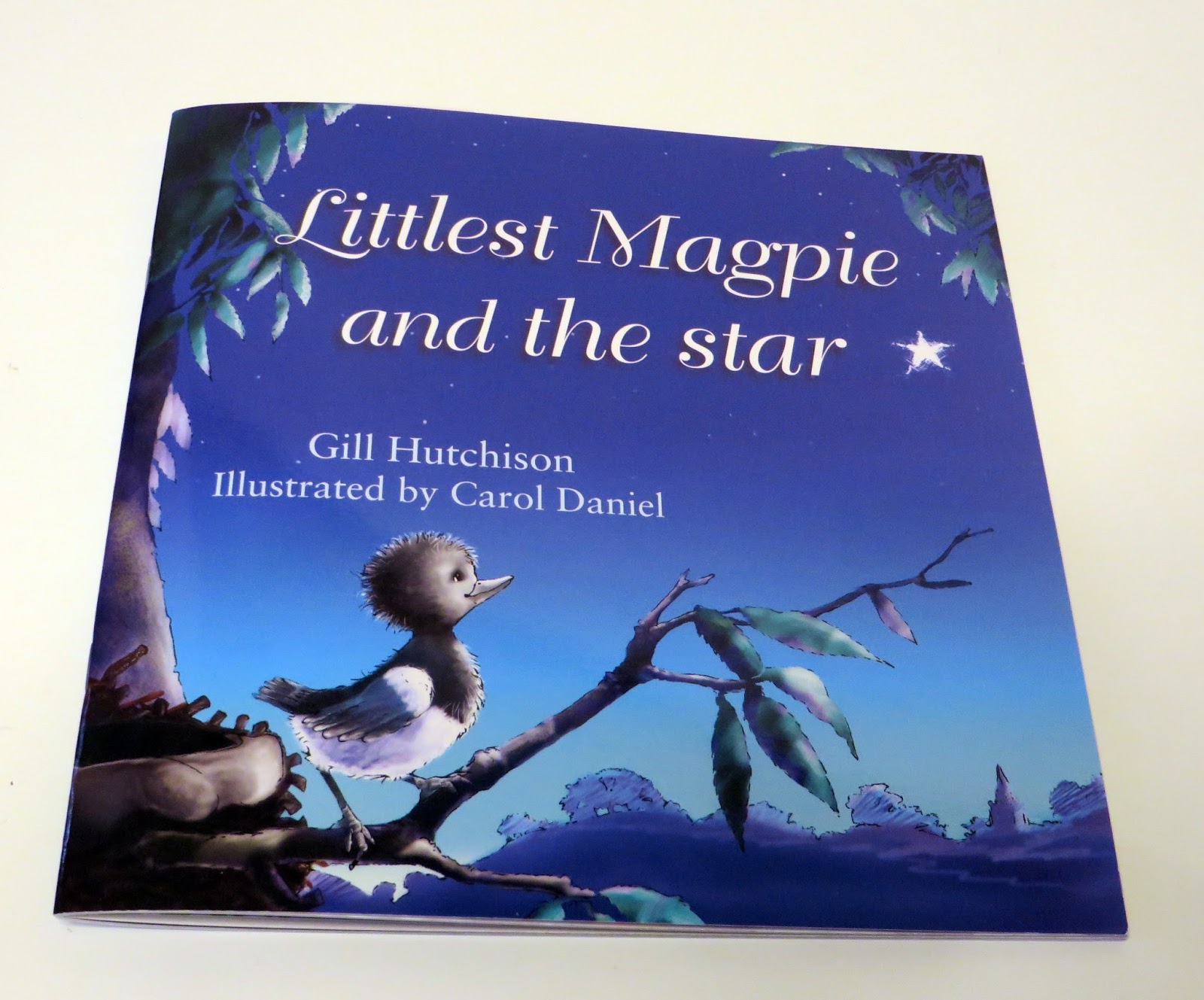
The littlest Magpie and Star by Gill Hutchison and Carol Daniel


The littlest Magpie and Star is a touching story about (you guessed it) the Littlest Magpie and his aspirations to catch and own the shiniest of all shiny things a star. But stars are very high, and the Littlest Magpie has a lot to learn first, like how to fly and even more importantly patience as the wise Old Owl tells him to wait for the snow before looking for a star of his very own. When Magpie is grown and the snow lie thick, he goes on the hunt for his star, and along the way he make some unexpected friends and get given a gift of a gift of… YOU NEED TO READ IT TO FIND OUT!


The littlest Magpie and Star, is a charming story with beautiful wintery-coloured illustrations by Carol Daniel, and I guarantee it’ll bring a tear to your eye, but perhaps not so much as the story behind its publication. Inside the back cover is a photo of the immensely talented author Gill Hutchinson, who wrote the story for her granddaughter, and whom had been a writer for many years with the aspiration of publications. Sadly, just as publishers were really getting interested in Gill’s work she passed away. Her dreams of becoming published lived on, and a dedicated group of her friend’s crowd funded the money and both created and published this beautiful book.

So, The littlest Magpie and Star is a book with not one but two moving heart-warming stories within it. This book is truly a lovely read, and if you wish to purchase a copy please visit the web-site: The Littlest Magpie.

The White Fox by Jackie Morris


Jackie Morris is an award winning author and illustrator who specialises in energetic watercolours of wildlife. The White Fox is a stunning book featuring her exquisitely executed illustrations, along with the story of Sol, a twelve year old living with his father in Seattle, a long way from his home and family in Alaska. Sol’s life isn’t ideal, his Dad is mourning and working long hours at the docs and the kids at school ostracize him due to cultural and visual differences. But everything changes when Sol strikes up an unlikely friendship with an equally displaced White Artic Fox. As boy and fox bond, a sequence of events unfold that bring Sol and his father closer together and instigates a journey back to home and happiness.


The White Fox is visually stunning and is full of positive themes about the harmony between wildlife and humans plus the importance of family and heritage.

The Fox and the Star by Coralie Bickford-Smith


Ok, I think I should set this straight; when I started compiling this post I didn’t intend there to be a theme (other than wintery tales), but I suddenly realise that it has become very well, foxy, starry and magpie-y. That said, I offer no apology as these have all been selected on merit, and just happen to coincidently create a theme by their juxtaposition.

As I said, all these books have been picked by merit, and The Fox and Star is no exception, it or more accurately they, as I’m reviewing both the hardback and paperback which are subtly different but equally exquisite.

The Fox and the Star tell the tale of fox, whose only companion is star that he follows through the forest, but then one night when fox looks up, the star is nowhere to be seen. Lonely fox, searches for star to avail, until one day something changes, the leaves fall and when he looks up he sees the and his friend star along with thousands of other stars in the winter sky. 


Both books, are stunning; from the very ‘Filo Society esk’ fabric covered hardback with white cover illustrations, or the larger format picture books, with bright cover, with autumn colours which offers a vintage almost ‘Rosie walk’ feel. Inside the book share the same rich illustrations; highly stylised with repeated patterns and limited pallet, creating an atmospheric and aesthetic feast for the eyes, which will be enjoyed by children of all ages.

Thank you for stopping by and reading our first instalment of recommended winter reads, please stop by again for part two, where we will be talking; elves, dinosaurs and snow queens.


*please do not get me wrong both The Lion Witch and the Wardrobe or The Box Delights are great books to read all year around as are the rest of the amazing children’s classics, we are just offering an alternative!

Wednesday, 16 November 2016

Grandpa was an Astronaut by Jonathan Meres and Hannah Coulson – Story Sack – Barrington Stoke


Continuing our features on Story Sacks, we bring you a space themed Story Sack inspired by Grandpa was an Astronaut by Jonathan Meres and Hannah Coulson. From the moment I opened up the padded envelope (with the tell-tale Barrington Stoke squirrel on the front), and laid my eyes on the vibrantly illustrated front cover of Grandpa was an Astronaut I wanted to not only review it but make it the central component for a Story Sack.

The story it’s self is beautifully simple, exploring the tender and joyful relationship between grandparents and grandchildren. Where two generations of the same family bond through play and make-believe, utilising every child’s favourite toy, a cardboard box. In a cardboard-box-rocket, Sherman and Grandpa, a former astronaut, go on an expedition to the moon. The story is told in a way that will engage young readers and bring a wave of nostalgia to adults. The story is further brought to life by the wonderfully colourful and energetic illustrations by Hannah Coulson. All in all, it’s is an ideal story to be shared by the whole family at story time.


With the story being so captivating, and being to the back drop of space I went about creating a Story Sack around it. As you may know, Story Sacks are designed to get children excited about reading. A story sack is a bag and inside there is a good quality fiction book (usually a picture book) and a non-fiction book which is related. There are also soft toys a game and sometimes an activity sheet. All the contents of the sack relate to the story in the fiction book, and are designed to explore the story in other ways, and to ignite the child’s imagination.

So when putting together story sacks I firstly look for the soft toys, for the Grandpa was an Astronaut Story Sack, I opted for finger puppets for Sherman, Grandpa and Mum (which are inexpensive and readily available on online), and a small dog figurine to represent Luna, Sherman’s pet.

Once the soft toys were in the bag (literally), I looked for a game, and found a lovely Rocket Game by Orchard Toys, and paired this with the fully illustrated Biggest and Best Universe Guide to be the non-fiction and educational elements of the sack. 


To further enhance the imaginative play, there is a crocheted moon, and a paper box rocket.

The completed Story Sack is colourful and fun looking, and should be enticing for children, furthermore, it was inexpensive as both the game and non-fiction books were sourced second-hand, and the puppets cost less than £1.50, making the whole thing cost less that £10.00, proving that Story Sacks can also be complied on a budget!

Thank you for stopping by and please drop by again!

Saturday, 12 September 2015

Pike - Anthony McGowan - Feature - Author Interview


Back in 2013 we were very luck to have run a 3D review of Anthony McGowan's Barrington Stoke YA novel Brock. As part of the feature we interviewed Anthony [press here to read]. This summer the sequel to Brock, Pike was published, so we have caught up with Anthony again, to ask him about writing sequels.

Do you find it difficult to reprise the voice of a novel when writing a sequel?

I found it pretty easy. I'd come to know Nicky better than almost any other character I've created, and he was very very real to me. He isn't actually much like me (being honourable, courageous, kind, and patient), but I became him while I was writing, and the skin was waiting, ready for me to don it again...

Brock and now Pike are both written in first person from the perspective of Nicky, did you find that Nicky had evolved or grown between writing the first book and the second?

In Brock, Nicky is almost saintly - he hardly ever loses patience with Kenny, and heroically copes with all the problems in his life. In Pike, I wanted to add some complexity, making him a bit more human and flawed, without losing the fundamental decency that makes him special. And in Pike there's a sort of reversal, in that Kenny is more active, and at times behaves like the older brother he is, despite his learning difficulties.


How hard is it fitting back story from the first book, Brock, into the second, with the tight word count of a Barrington Stoke novel?

Rather a lot happens in Pike - as well as the basic treasure hunt plot, there's a lot of family and character development, and it was quite taxing fitting it all in. Luckily Barrington Stoke have given me a few more words than they normal allow. As for the back story, I wanted the book to stand on its own, as well as working as a sequel, and it's always a challenge in that situation to get the balance right, whatever the word-count.

In Pike, you see both Nicky and his brother Kenny develop, and their family story unfold. Will be seeing more of Nicky and Kenny in future novels?

After I finished Brock, I knew that I wanted to revisit Nicky and Kenny and their world. I had a vague idea for the plot almost straight away, and was champing at the bit to tell it. I don't feel quite the same now. I'm certainly not repelled by the idea of going back to them for the third time, but, at the moment, I don't have a 'story' for them to tell. It's probably worth pointing out that the Pike and Brock actually form a sort of loose trilogy with The Fall - the main character in The Fall plays a minor part in Pike, and achieves a kind of redemption in it for his earlier sins.


What is your favourite thing about Pike?

Obviously it's the relationship between Nicky and Kenny, which is perhaps the thing I'm most proud of creating in my career as a writer. But the setting is also very important to me. It's based very closely on the small town/large village where I spent most of my childhood - Sherburn in Elmet in North Yorkshire. It's not a beautiful place, and has taken a battering over the years, but it has character and resilience. And pubs! The Bacon Pond is a real place, as is the little wood where Nicky and Kenny rescue the badger cub in Brock. And the library and librarian are drawn from life.


Friday, 11 September 2015

Pike - Anthony McGowan - Feature - Editor Interview with Mairi Kidd from Barrington Stoke

Back in 2013 we were very luck to have run a 3D review of Anthony McGowan's Barrington Stoke YA novel Brock. As part of the feature we interviewed his editor Mairi Kidd [press here to read]. this summer the sequel to Brock, Pike was published, so we have caught up with Mairi again, to ask her about editing sequels.


Is it any easier or harder to edit a sequel than the first book?

Different books present different challenges and with a sequel, a series or a companion piece, there is a little added challenge in that it's important to ensure continuity across all of the installments. In my experience, though, authors get to know their characters and setting so well in series that the first drafts of second and third installments are often stronger than early drafts of the first book. Perhaps editors of George R R Martin-esque sagas would give you a very different answer, though!

As a children’s book editor / publisher, do you have a time frame in which to publish a sequel for it still to appeal to the readers of the first book?

When it comes to big commercial 'continuities' - like the Twilight series, say - it's a case of the sooner the better. The idea is that you want to catch the readers who loved the first book, and because children grow up so quickly, you really do have to move fast. We publish series such as Tom Palmer's Rugby Academy in this way to create anticipation and excitement - in that case we published installments every six months, and publication dates were linked to rugby seasons.

On the other hand a later sequel can give the original book a new lease of life and introduce it to a new generation of readers. An extreme example of that is To Kill a Mockingbird, sales of which are apparently up 6600% since the publication of the sequel was announced.

Why do you think children/teens like sequels so much?

I think it's human nature to want more of something we love, and that's even more true of children, who are in a learning-heavy phase of development and can really benefit from revisiting familiar content. That's why young children love to return to the same book over and over again. With a series, the first book does the hard work of introducing the characters, setting and so on, and future installments can take the story and the characters further and further. Think Discworld, where Granny Weatherwax starts out as a minor character and becomes a force of nature.

I do think there's a danger that commercial considerations can result in slender ideas being overstretched by sequels that are unnecessary in creative terms. For my money The Hunger Games is an example of a book that didn't really need two sequels, and I don't think she's really in control of the sequels to the same degree. And personally I hate books like Mrs De Winter or Death Comes to Pemberley that take a gorgeous novel and try to weave in a sequel that necessitates untying the ends the novel has neatly tied up. It's like a published version of the sort of online fan-fiction that needs to know what happens in the bedroom between Jane Eyre and Rochester. Although speaking of them, Wide Sargasso Sea is an example of a very good revisiting because it challenges the very fabric of the original. Maybe that's the key to those sort of sequels - you can't love the original too much.


Why did you choose to commission a sequel to Brock?

We didn't actually ask Anthony for one; he offered the idea. In many ways I don't think Pike is a sequel to Brock - they feel to me like stand-alone books featuring the same characters. On some levels I love Pike even more than Brock. There's a moment when Nicky thinks about the fact that he takes the 'big brother' role as Kenny's almost-minder but actually he's the little brother and right there and then he wants his big brother. It broke my heart. In a good way.

What is your favourite thing about Pike?

That scene between Nicky and Kenny is just one of the many in which Anthony - and to a degree Nicky - lets Kenny grow. That, for me, makes the novel fantastically uplifting. And of course a pike bites someone's privates. What's not to like about that?


Thursday, 10 September 2015

Review - Pike – Anthony McGowan – Barrington Stoke - Review - Challenged Reader


Anthony Mcgowan and Barrington Stoke have published the much anticipated sequel to 2013 award winning book BROCK, [press here to read our 3D review of Brock]. In Pike, we return to the world of Nicki and his older brother Kenny a year after they saved a badger pup from a grizzly death by baters. The boy’s lives have improved; their dad has a job, a girlfriend, but money is still tight so the brothers enjoy the simple pursuits in life, like fishing in Bacon Pond.

It’s by Bacon Pond where there adventure starts, when their Jack Russell gets into deep water, and Nicki goes into to save her, he sees something lurking under the murky water; a hand, and a watch. The watch is a Rolex, and only one person in the town has the money for one of those, ‘Mick Bowen’. And Mick went missing after Nicki and Kenny’s dad told the police that the stolen goods found in their shed last year belonged to him.


Nicki hatches a plan, to get the Rolex and fence it for cash to help his family. Together the boys build a raft out of a palette, Kenny following Nicki loyally, and all is going well until their endeavours stir up memories from a happier times - feelings which were buried deep. When Nicki confronts his dad about why their mother left, the boys bond fractures.

Nicki continues his plan to plunder the Rolex, and we see the boy’s relationship evolve and reverse as Kenny becomes more of a leader looking out for his younger brother.

Like Brock, Pike is an engaging tale, with its sparse word count it evokes lovely images and explores further the themes of family, secrets, determination and resilience. It’s also a refreshing change to read a book which is about working class children living on the breadline rather than middle class privileged children.

Pike is great read for challenged young adult readers, but also as a quick read for more advanced readers too.


We'll be posting more PIke features in the next couple of days, with both an interview with author Anthony McGowan and Editor Mairi Kidd.

Thursday, 20 August 2015

Summer of Children’s Classics - Treasure Island – Skulduggery


This week we’ve been talking pirates, or more specifically the legacy that Robert Louis Stevenson’s Treasure Island has left in its wake since it first was published way back in the 1880’s. So now, we look at a more recently published of book inspired by the world and characters of the swashbuckling classic.


Interest Age: 5-8
Reading Age: 6+


Skulduggery is a quirky comic adventure following a boy on his first day at a new school, “Squire Trelawneys School for Young Sea Dogs.’ The enthusiastic ‘sea-pup’ who is dressed in full pirate regalia becomes downhearted to discover that (due to the pressures of the modern education system) that the school is not what he expected, and is just like any other ordinary school.

After a running with two of the school scoundrels ‘Billy Bones’ and ‘Black Dog’, he makes friends with the charming, ‘Short John Silver’ who helps him stash away his treasure chest. Like any good pirate yarn, the treasure disappears and it turns out that John has a sliver tongue and is in fact at pirate captain. As the new sea pup, ‘Ben Gunn’ embarks on an adventure on the high seas to save the school he pounders; can he trust Short John Silver?

Sir Tony Robinson has produced a quirky humorous book for younger readers bringing in the themes and characters of, ‘Robert Louis Stevenson ‘s, Treasure Island. It is a funny age appropriate introduction to the classic for younger readers, which is enhanced by Jamie Smith’s lively illustrations.


Friday, 17 April 2015

ANZAC Boys – Tony Bradman – Barrington Stoke - Challenged Reader Review


Reading Age 8
Interest Age 10+


The Anzac Boy’s is an emotional read, which although part of Barrington Stokes titles that have been published to commemorate the centenary of WWI is much more than a story of war. Tony weaves a story that comments on many things posing poignant questions about war and the treatment of vulnerable children, but its core is family.


The ANZAC Boys explores the complexity of family; loss, regret, hurt, hate and ultimately understanding and forgiveness, as it follows the path of two brothers Bert and Frank who at the tender ages of 12 and 9 have already lost much; both parents, their home, and soon their country as the orphanage where they reside ships them off to the new world. After the long journey the two boys are parted as The Church sends Frank to New Zealand and Bert to an orphanage in Australia. Bert is riddled with guilt for breaking a promise he made to Frank that he would take care of him, and over the next four years tries to contact his brother with no avail.


‘The cart I was in swung left, and Frank’s to the right. I watched in horror as Frank’s cart vanished into the gloom.
It was a week before they told me my brother had been sent to New Zealand.’


Tony has penned a book that within a frugal word count, really shows the atrocity of the treatment of the vulnerable children in the care of The Catholic Church, who were forced to work hard labour, sub-let out to farmer and ranchers with no pay or care for their welfare. As Bert grows into a man he begins to question the church’s methods and the merits of the education that it provides especially when he turns sixteen and he receives a letter from the intuition to tell him he must fend for himself.


‘I worked from dawn to dusk for a dour, mean farmer who treated me like a slave.’
‘Nobody cared if I lived or died. There were moments I wasn’t sure that I cared myself.’

Bert embraces his freedom and sets out to better his life and find Frank, despite contacting every orphanage in New Zealand he has no luck and with the onset of world war one joins the Australian Imperial Army. Whilst on his way with the rest of the combined Australian and New Zealand Army Corps, the ANZACs, Bert is reunited with less than enthusiastic Frank, who is now grown and heading into battle too.


‘I was staring at one of the Kiwis, and he was staring back at me.
“I… don’t believe it,” I murmured. I felt like I was in a dream. “Frank?” I said. “Frank?”
The Kiwi knocked over his hair as he stood up. His face was white and hard with rage.’


As the brothers are sent to Gallipoi, Bert tries to win back his brother affection in a world of death and destruction. The ANZAC Boys explores many complex and difficult issues, with the details of horrifying situations are weaved together in a tactful and subtle way yet persevering the gravity and emotional impact.


‘The 25th of April 1915 was the worst day of my life, even worse than the day Mum died or the day Frank and I were separated.’
‘It was utter chaos – brutal and bloody and awful. ‘

The Anzac boys which is inspired by the real life and is a testament to the power of verbal storytelling which had preserved a very personal story for almost one hundred years, before Tony chose it as the basis of this moving story of family bonds and perseverance.