Showing posts with label 3D review. Show all posts

Wednesday, 18 July 2018

3D Review, ‘Is it a Mermaid?’ by Candy Gourlay and Francesca Chessa - Illustrator Interview with Francesca Chessa


Continuing on our 3D review of  'Is it a Mermaid' we are delighted to welcome  Francesca Chessa on to the blog to talk about visualising the story through her beautiful illustrations.

What was your favourite children’s book as a child?

My favourite book as a child was Tomaso written and illustrated by Vittorio Accornero, first published in 1944.

Tomaso talks about the life of a dog called Tomaso who was bought by a family of cats as a Christmas toy for the spoilt kitten of the house.

During the summer holidays, not knowing what to do with Tomaso, the cats leave him in the countryside, where Tomaso will meet a family of rabbits that will treat him as a friend, he will give his life for them.

I learned to read on this book it remained in my heart.


What is your favourite children’s book as an adult?

There are so many books I was inspired and that still inspire me that it’s quite impossible to me to choose just one.

The books I like more are amusing, have a good plot, a turning point and surprise me until the end.

My favourite books are the ones where text and illustration are necessary one to each other and you couldn’t imagine one without the other.


What do you think makes children’s books so inspirational?

I think that a good picture book needs to be intriguing, mysterious, funny and enveloping. It must be a book that every time you read, you can discover something new that increases your love for it.


Did you always want to be a children’s book illustrator?

I have always loved drawing and I have always loved reading and looking at the figures in the books. As soon as I realized that I could turn these my passions into a job, I thought I had found how to occupy my time working with passion and joy.


What is it like visualising other people’s characters?

When I work on a text of a writer and on its characters I try to figure out what the author wants to tell. Then I like to add some elements that belong to my world and my interpretation of the story, trying to create images that contains both our worlds.


Can you please explain a bit about your process of illustration?

For my illustrations I am taking inspiration from what I can read, I can see, I can hear, I can touch, I can taste. I like to think that I use all my five senses to develop an idea. The story concept comes first, then the main character, then all the story develops itself step by step by connections between characters and scenes.

I usually work together with the art director. Good art directors let you free but at the same time are able to show you a way and to get from you a better result than the one you could have reached just by yourself.


Francesca Chessa was born on a cold December day in a small north Italian town close to Turin.

She graduated in Architecture but, after some years of working as an architect, realised that she would rather paint animals and the things that surrounded her. Hence she did a course in Illustration.

Since 1997 Francesca has illustrated more than forty children's books working with publishers in various parts of the world including Italy, England, the US, France, Canada, Spain and Japan.

She has received mentions and prizes in a number of international competitions. She now writes her own stories as well as illustrating those by others and likes to feature her family and friends in these. She illustrates for Unicef and Amnesty International.

Francesca lives in an old house in the centre of Turin with her husband. Her studio is colourful, full of books and looks over a small courtyard garden. She loves reading, watching movies, cycling, swimming and skiing.

Thank you for stopping by, please pop back tomorrow to see our 'Is it a Mermaid' Story Sack feature! 

Tuesday, 17 July 2018

3D Review, ‘Is it a Mermaid?’ by Candy Gourlay and Francesca Chessa - Author Interview with Candy Gourlay


Following on from yesterday's reviews of Is it a mermaid, today we have an interview with the wordsmith who brought us Benji, Bel and the dreaming Dugong, Candy Gourlay.

What was your favourite children’s book as a child?


​This is always a difficult question because I read and loved SO MANY books as a child. Many of the books were school issue readers – I went to a convent school so we were given hardback, colour illustrated books called Cathedral Readers. They were anthologies of stories that ranged across many genres. My dad also liked to buy books from the door to door encyclopaedia salesmen (did you have those in England?) ... and he once bought a collection called the Collier's Junior Classics, which excerpted the best children's book of the time. One story I loved was The Twenty One Balloons by William Pene Dubois – about a secret, high tech society living on Krakatoa before it erupted. I loved the illustrations and all the tech invented by the characters, like pneumatic beds that could be pumped up high (through ceilings that slid out of the way) so that children could go to sleep with a view of the night sky. There were many problematic things about the story – such as the absence of Indonesians on an Indonesian island. But as a child, I simply loved the adventure of it!


What is your favourite children’s book as an adult?

​Another tough question! But I have to say I love Frank Cottrell's books, especially Millions, about a boy who finds a holdall stuffed with millions of pounds and then he has to spend it all before the UK joins the Euro (sadly, now the stuff of fantasy as Brexit looms). The characters were so lovable and the writing was clever and engaging. ​

What do you think makes children’s books so inspirational?

​There is always a warm heart beating inside a story written for children, a hopefulness that you might not discover in a book written for adults.​

Why did you start writing for children?

I wanted to become a writer on the day that I fell in love with reading. I actually remember the moment and the feeling when I realised that the characters on a page were telling me a story. Everytime I write I remember the explosion of delight I experienced on the day​ I read my first book, and I've always wanted to recreate that feeling for other children.


Do you think about how the pictures will work with the text as you are writing?

​Yes I do! When I write picture books, I often begin by drawing comics – I did a comic strip for a weekly magazine a long, long time ago – ​and I draw until the story begins to emerge. And only then do I begin to fashion words.

What is the biggest challenge in crafting a story with such a small word count?

​The small word count is an exciting challenge and because I love to draw, I don't mind surrendering punch lines to the illustrator. The biggest challenge, really, is not creating the story but creating a story that fits the needs of a publishing market that is limited by its reach and the expensive risk posed by every picture book because nobody knows what story will capture the imaginations of the most readers.


"Candy Gourlay gave up writing picture books for novels after years of rejection. She is over the moon to become a picture book author at last with Is It a Mermaid, though her novels have been listed for many prizes including the Waterstones, Blue Peter, the Carnegie and the Guardian Prize. Her third novel, Bone Talk, will be published in August."


Thank you for stopping by, please come back tomorrow for an interview with Is It a Mermaid's, illustrator Francesca Chessa!

Monday, 16 July 2018

3D Review, ‘Is it a Mermaid?’ by Candy Gourlay and Francesca Chessa – Reviews - Picture Books


Review By Beatriz, (a picture book loving) 14 Year Old Reviewer 


‘Is it a Mermaid?’ is an amazing short story written by Candy Gourlay. After writing several novels, Candy has produced her first short story picture book, aimed for primary school kids. The tale tells of a boy named Benji and his sister Bel, who meet a friendly creature in the sea. The creature says she is a mermaid! However, Benji is sure it’s a Dugong! Bel and Benji set out with the creature to prove their points right. Is it really a mermaid? 


This tale is kind and shares a message of friendship and wonder. Carefully written, the book is wonderful to the end. Accompanied by beautiful drawings by Francesca Chessa, Benji and Bel create a special magic and a lovely story for all to read!


Adult Review by (a picture book and Dugong loving) Adult! 


Is it a Mermaid? Is a fun and charming tale panned by Candy Gourlay and exquisitely illustrated by Francesca Chessa. Set amongst vibrant backdrops the story tells the tale of two children who come across a mysterious, singing sea beast who is convinced she is a mermaid. Of course the children know better, tell their new friend the truth that she is not a mermaid but a sea cow, a dugong.


The creature is upset, but as mermaids are very forgiving, and the children are sorry, soon the threesome, are playing together and having a wonderful time, and it soon becomes apparent that Dugong, Mermaid or Human, it make no difference as friends accept each other for who they are.


Is it a Mermaid? Is a lovely picture book, which explores friendship plus brings a much neglected creature into the heart of this charming tale. Candy’s words along with Francesca’s beautiful imagery has created a delightful book, that is more than it seems, as it sprinkled dugong facts throughout the book and contains a page of dugong information to further peak children’s interest, and highlight the conservation issues that effecting the dugongs habitat. Is it a Mermaid is a truly beautiful book.


Thank you for stopping by, please visit us again this week, as we will be posting an author interview with Candy Gourlay, an illustrator interview with Francesca Chessa, and an article on a Dugong teaching resource too! 

Friday, 25 May 2018

3D Review - Kate Wiseman - Editor Interview with Elaine Bousfield the MD of Zuntold Publishers


What was your favourite children’s book as a child?


I loved reading more than anything else in the world. It is difficult to choose just one book to be honest. As a younger child there were two books that stayed with me for quite a long time. The first was Carbonel by Barbara Sleigh and the second was The Water Babies by Charles Kingsley.

I loved, and still love, books with a magical element or fantasy edge to them. I drove my sister mad with the Water Babies because I insisted that if I poked my heads under my bed covers at night, there was an ocean waiting for me, where I would turn into a Water Baby and have all sorts of adventures. I was so convinced of this, that my sister went crying to my mum, saying she was afraid that I would drown.

What is your favourite children’s book as an adult?

Ok..again this is difficult. I think my favourite has to be Northern Lights by Phillip Pullman. It is quite a tricky read for many children though - I think it is more likely to be enjoyed by older children - age 11 or 12 onwards. I love this book because of its beautifully detailed world building, and the amazing concept of the daemon - that part of our soul that lives outside our body as a separate but intricate part of ourselves.

I loved it, also because it combined a wonderful female character (Lyra - strong, curious, impatient, kind) with a fantastic life-changing adventure. It was pure genius. It was an important book because it tackled questions of adult power and how adults abuse their power sometimes and of course, the role of religion. It asked the important question, how can we find meaning if there is no God? They are big questions but I think children all over the world think about these things. Not many children’s books explore such complex themes. I also loved A Monster Calls by Patrick Ness, a masterpiece in that it explores grief and loss, and the suppression of guilt which so often accompanies it.

What do you think makes children’s books so inspirational?

Ok…my immediate answer to this is they are not self -conscious; they remind us of the importance of play. They allow us to imagine again. And they teach us things about ourselves and the world without preaching at us (the best ones do anyway). I think our education system drills the imagination out of us and we forget how to play. Children’s books allow us recourse once more to a deeper, more connected inner world.


What do you love about this book and what makes it stand out?

I love gangster school because of the reasons mentioned above. Kate is so playful - the story turns the normal world of school on its head and gives us chaos, naughtiness and rule breaking instead. And it places at the centre of the story, two very different personalities who soon learn that despite being different, they need each other. So its about friendship and loyalty but it is also hilariously funny. I love Gruffles and Wolf. Kate develops characters well alongside a sizzling plot-line that keeps you turning the pages. The second Gangster school had me laughing so much, my entire family came up to my loft room where I work to see what I was laughing at.

How many people have worked on this book and for how long?

I got to Gangster School quite late in the day and didn’t have to do much editing to be honest. Just a little bit here and there. Kate worked on it for four years I think, but the other Gangster School books are being written much more quickly - the characters now have a life of their own I think. We also have our production team at Carnegie - Anna the MD there took a look and loved it p- and Lucy did that typesetting. Isla Donohoe, a young artist from Manchester designed the cover - like me she read both the first Gangster School and the second and could not stop laughin


Elaine Bousfield has worked in mental health and trained as a counsellor, working for many years with young people. She ran her own business, Xenzone, and developed an online counselling and support platform for young people called kooth.com . She sold Xenzone in 2015 and is still its chair and founding director. She writes fiction herself and in 2017 set up Zuntold with the aim of publishing new and exciting fiction for children and young people. She is particularly interested in diversity and the role that fiction can play in changing lives. She is interested in exploring fiction which can be used in therapeutic work with children.

Wednesday, 23 May 2018

3D Review - Gangster School - Kate Wiseman - Author Interview


What was your favourite children’s book as a child?

That’s a hard question! There are so many to choose from. As a child, I used to get told off for reading in the shower and ruining my books. I was very dedicated.

There are two that really stand out in my memory: the first is Five Children and It by E Nesbit. I loved the Psammead (sand fairy) with his lumpy body and grumpy attitude and his eyes on stalks. He grants wishes to the children who dig him up, and they always backfire in some outlandish way.

My other childhood standout is My Family and Other Animals by Gerald Durrell. I was green with envy at Durrell’s unconventional life on the island of Corfu, enchanted by his descriptions of nature, and his family’s high jinks made me laugh my grubby knee-high socks off.

What is your favourite children’s book as an adult?

Another tricky question. There is so much brilliant kids’ lit out there. I’ve read Phillip Pullman’s Northern Lights countless times and my family never tire of trying to work out what form someone’s daemon would take. Beware though – it may cause offence. Another favourite is Ross Wellford’s wacky, funny, touching Time Travelling with a Hamster, which incidentally also gets my vote for Best Book Title of All Time.

What do you think makes children’s books so inspirational?

One of the great tragedies of growing up is that we’re encouraged to downplay the importance of imagination in favour of other, more ‘practical’ qualities. Kids’ books embrace imagination and celebrate its power to transport us beyond the confines of the everyday.

As life becomes more and more pressurised and kids are pushed to conform to society’s expectations regarding everything from passing endless assessments and exams to the way they look, children’s books are a portal to countless other worlds where they can live a million different lives. They have no limits.

Why did you start writing for children?

When I finally got the courage to write fiction instead of essays, it never occurred to me to write anything else. I love the freedom and spontaneity of kids’ lit. It allows me to pour my overactive imagination and daft sense of humour into my writing. I still can’t imagine writing for adults and doubt that I ever will.


What made you want to write this book?

My son had just gone off to university and I was moping around, biting my lip every time I passed his bedroom door, and I needed to concentrate on something else. I decided to stuff all my fears of failure into a little box, lock it away in a dusty corner of my mind and have a go at fulfilling my childhood ambition of being a writer. I’ve worked with kids for a long time and writers are encouraged to write about what they know, so a school was an easy choice.


When my son was smaller, he used to disconcert people who asked him what he wanted to be when he grew up by saying ‘an evil genius’. That got me thinking – what would a school for young felons actually be like? And what would happen if you got sent there, but you weren’t actually a criminal at all?

What is your favourite aspect of writing for children?

Being able to give free reign to my imagination. I especially love concocting a rich history for Blaggard’s School for Tomorrow’s Tyrants. To me, the characters of Sir Thomas Blaggard, the school’s founder, who was born in a mud hut on the banks of the Thames and survived by eating stinging nettles and wrestling bears until he found his criminal feet, and Sally Masters, the eighteenth century Highwaywoman (nickname Blunderbuss Sally) and Foggarty and Spinks, the body snatchers, make the school what it is today. I also love thinking up situations that make me giggle.


Kate Wiseman is a wife, mother and cat minion who lives in Saffron Walden, Essex. Her many years experience of working in schools prompted her to begin writing about Blaggard’s School for Tomorrow’s Tyrants, the world’s best educational establishment for trainee villains.

Gangster School was shortlisted for several prizes and was published first in Germany, by Piper Verlag in October 2017. Piper has just released Gangster School 2: The Brotherhood of Brimstone and there are more to follow. Gangster School is also being published in summer 2018, by Uitgeverij, Holland.

Kate has a degree in English and Creative Writing and a Masters in English Literature. Gangster School is her first novel.

Monday, 21 May 2018

3D Review – Gangster School Kate Wiseman – Reviews


Gangster School is a funny, action packed adventure following the most dependable of the new intake of year seven students at Blaggards Gangster School as Milly and Charlie try to fit into their new school, win the converted thievery competition and battle a super villain that’s hell bent on taking down the school and after that world domination.

We watch as quick thinking and resourceful Milly Dillane the daughter of a family of art forgers and skilled hacker Charlie of the family Partridge famous for kidnapping, embark on their first year at the school which is renowned for its output of infamous scoundrels and villains. Both want to make their families proud, but have doubts about their criminal tendencies, feeling like they are much more dependable (honest non-criminals), but also don’t want to end up at the rival school Crumleys a dangerous establishment for lower class of criminals, which is built on a mound of deceased failed students.

Milly and Charlie, become fast friends and allies helping each other navigate through classes, outwitting older students initiation rituals and even thwarting the most infamous evil villain, Pecunia Badpenny who visits the school with the intent on destroying her nemeses the renowned head teacher Ms Martinet, brainwashing all the students and then using her new technology and student criminal army to brainwash the army, and police in her bid for world domination. Using their unique talents and dependable moral compasses, Milly and Charlie along with a little help in the form of Gruffles Charlie’s unruly pet dog, and Badpenny’s unloved robot dog-henchman Wolf, save the school and even win the thievery competition. 


With Gangster School Kate Wiseman, has used the ‘fish out of water ‘ concept of new students in boarding school, but has made it very much her own, creating an funny and chaotic world, where the protagonists are undeniably the good guys, but are trying to pass as not-so-good, amongst a cast of shady eccentric and funny characters. This leads to many amusing incidents throughout the story, making for a funny read, both for children and adults, as she uses every criminal cliché with excellent comic effect, personally I loved the nods to early criminal facial profiling with the possibly the best monobrow in children literature!

Gangster school from its vibrant and humorous cover illustrated by Isla Bousfield-Donohoe, to its final chapter is a fun rip-roaring adventure.

Child Review by Spike (a boy who is frugal with words)…

Gangster School is awesome. Is there a real Gangster School? If there is can I go? And if yes, can I have a robot dog?


Would you like to win a signed copy of Gangster school, along with a loot bag complete with stripy criminal t-shirt and criminal mask to decorate? If so head over to Twitter and check out our competition. @Bookshelfspace

Wednesday, 14 March 2018

My Colourful Chameleon by Leonie Roberts and Mike Byrne - 3D review - Author Interview


Today we are continuing our 3D review of My Colourful Chameleon, with an interview with author Leonie Roberts.

What was your favourite children’s book as a child?

Ooo this is a tricky one. I can remember enjoying Jill Murphy's "Five Minutes Peace". I think this was my Mum's favourite to read.

What is your favourite children’s book as an adult?

At the moment my favourite is Roald Dahl's "The Twits" because I have recently re-read it and have been reminded of how fabulous it is.

What do you think makes children’s books so inspirational?

They are a child's first introduction to books. The unique way that the pictures and words work together can ignite childrens' imaginations and really bring familiar and fantastical worlds to life.


Why did you start writing for children?

Me being a Primary School Teacher probably had a large impact on why I started writing for children instead of adults. Initially I wrote poetry about children for adults but then the ideas for stories for children began to pop into my head. It has definitely helped me to get into the mindset of a child by spending so much time with them. There is never a day working with young children were you don't come home with a funny story about what they have said or done. Children are amazing!

When writing the book, do you think about the illustrations will interact with the text?

Yes, most authors to consider how the illustrations will interact with the text and I could certainly picture what would be going on each page. I didn't give any illustration notes though so Mike Byrne had completely free reign and I am delighted with his interpretation of the text.

Do you love chameleons?

Sadly I haven't met one in real life but it is definitely on my to do list for this year. I think a trip to the zoo is called for!


LeoLeonie Roberts (1984) was born in Plymouth and raised in South Liverpool. Although as a child she did not enjoy reading herself, Leonie has always been mesmerised by listening to wonderful stories. She grew up with the tales of Roald Dahl, The Pongwiffy series by Kaye Umansky and classics such as "Stig of the dump" by Clive King.

Around the age of seventeen, Leonie’s love of reading began and she went on to study English Literature and Language at university. Since then, Leonie has trained as a Primary school teacher and has spent three wonderful years living and teaching in Italy. It was there in 2013 that she began writing for children.

Leonie is now back living in Liverpool with her new writing companion, Chester the dog. She has written a number of picture book stories and can be often found in local libraries sitting on small chairs, making her way through a giant pile of picture books (whilst trying to blend in)
.

Monday, 12 March 2018

3D Review - My Colourful Chameleon – Leonie Roberts and Mike Byrne – Review – Picture Book


My Colourful Chameleon is a fun bright exciting story about one cleaver little girl and her misunderstood pet.


The trouble is her pet chameleon keeps changing colour and blending in with its setting, causing mayhem ay home, school and in the car. Mum thinks the chameleon is trouble – or poorly, but her daughter is adamant that her pet is cleaver and is changing colour to camouflage its self to keep its self safe.


The story is written In rhyme with a laugh on every page, combined with beautiful illustrations by Mike Byrne, and the plumb in the pudding is (or course) that the little girl is right!


My Colourful Chameleon is further enhanced with educational prompts and craft ideas at the end, it is a lovely introduction for younger children to Chameleon’s ability to change in a fun way!


Come back later this week for more My Colourful Chameleon posts, including author interview and a story sack! 


My Colourful Chameleon - Child Review by Oscar

I LOVED this book. It is so funny, and now i want a chameleon as a pet too!


Thank you for stopping by and reading this review, please pop back later in the week when we post a Author Interview with My Colourful Chameleon's Creator Leonie Roberts, and a post with ideas on how to construct  a story sack inspired by the book!


Wednesday, 24 January 2018

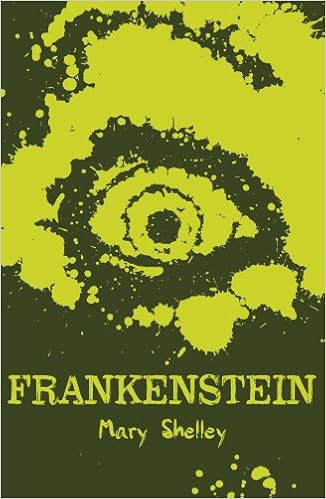
Mary Shelley’s Frankenstein at 200 – A Look at its cultural Impact & Legacy


Just like The Monster with its in-human size and elongated shadow, Mary Shelley’s Frankenstein/ The Modern Prometheus, has had a massive impact on culture which has spanned the past two centuries.

To start Frankenstein is deemed by many to have been the first ever science fiction novel, with notable author Brian Aldiss stating that Frankenstein is "the first seminal work to which the label SF can be logically attached." This is partly due to Shelley’s book being the first to have a protagonist actively and intentionally choosing to peruse science. This is in my mind is a crowning achievement, as Science Fiction is most commonly associated to me a male dominated genre, the fact that the book that birthed the genre was written by a woman, and a teenager at that it astonishing.

Of course like all great writers there are people who will contest Mary Shelley’s authenticity, with many people over the years alleging that the teenage Mary was too immature to have written the manuscript and that her then lover and future husband Percy Shelley actually wrote it but due to being essentially blacklisted by publisher had her submit on his behalf. Having said this, if Percy was going to have someone publish it surely he’s have picked a male pen-name not have Mary publish it anonymously? It is the anonymous author of the 1818 edition which has sparked the debate on the penmanship, but then the time woman writers, generally could not publish under their own name, as with the Bronte Sisters. When it comes to maturity, it is worth remembering that Mary had a far from ordinary up bringing, surrounded by some of the greatest thinkers of the time who visited the family home to see her father journalist William Godwin. Although her mother died shortly after she was born Mary was fascinated and influenced by her writings, her mother being the philosopher, educator, and writer Mary Wollstonecraft who published some of the first ever feminist texts.


Controversy aside, Frankenstein has had a huge cultural impact, it was have spawned the Sci-Fi Genre, but it is most associated with Horror. This is strangely appropriate, as the story was written as a result of a challenge set my Lord Bryon (yes that one) to the party staying at Villa Diodati on Lake Geneva to all write a horror story.

Since its publication Frankenstein has continued to be one of the cornerstones of horror, the famed Boris Karloff green faced high browed monster from the Universal Dark Universe of the 1930 is synonymous with Frankenstein today, and its influence has reverberated through the twentieth century and into the twenty first. The association with horror was further cemented with Hammer Horror films of the mid-20th Century, and many other adaptions, to varying quality, Kenneth Branagh good, the Daniel Radcliffe fronted Victor Frankenstein from 2015 not so good. And now the Universal Dark Universe reboot (if it ever gets off the ground) with Javier Bardem due to take on the role of The Monster.

One thing is clear Frankenstein translates well to the screen, with many directors inspired by the tale of man and monster, but none so much as Tim Burton, who has reimagined the tales on many occasions. Starting with, Frankenweenie, about a boy who brings his deceased pet dog back to life, which the director has made not once but twice! First as a live action black and white short in 1984, then as a full length animated feature in 2012. Then his character Sally from Nightmare before Christmas graphic novel and animated film, is also a Frankenstein type creation. Burton's 1990 movie Edward scissor hands about a boy created by a scientist who died leaving him with scissors for hands is also a homage to Shelley's tale.


The influences stack up, from Herman in the Munster’s, to Frank in Hotel Transylvania, Guy Bass’s Stitch Head to one of SOTB favourites Frankie in My Big Fat Zombie Goldfish by Mo O’Hara, and the very newly published Shell by Paula Rawsthorne. The Stage is no stranger to Frankenstein either with the Philliph Pullman's script or the highly praised National Theatre's Danny Boyle directed play starring Benedict Cumberbatch and Jonny Lee Miller. To more modern takes utilising more modern sciences, like Ghost in a Shell and Blade Runner.


No matter what controversy and debate may continue over Mary’s penmanship, her book has had a huge impact and is still being used as a source of inspiration today. This year to mark the bicentenary of its publication, a movie about Mary herself and her writing Frankenstein will hit cinemas in the summer, fronted in the titular role by Elle Fanning called simply; Mary Shelley!


Monday, 22 January 2018

Mary Shelley’s Frankenstein at 200 3D Review


Frankenstein and his monster both turn 200 this month, and by way of celebration we at SOBS running a week Frankenstein posts. Over the week we’ll be posting reviews –an adult review and one by a teen. Plus running an article on the cultural legacy of Shelley’s creation and how it has manged to evolve and say relevant through the last two centuries. We’ll finish up with some Frankenstein inspires story sacks, for younger children and young adults. So first up, let’s start with the reviews.

Image result for frankenstein bookFrankenstein Review by Bea aged 13

Captain Robert Walton was trying to reach the North Pole, when he met Victor Frankenstein: The Creator.

Frankenstein, ill from the terrible cold, has been welcomed upon Walton’s ship where he reveals his past and the story of ‘The Monster.’ Frankenstein shows his private world of creating the creature and shows how his mistakes had led to him to be sick with worry, for how had he let his masterpiece escape? After endless search and disastrous help, he reveals word of his brother, William, who had been murdered!

More crimes committed towards his family, forced him to face his creation, but The Monster reveals that there is more to him than meets the eye. Is everything Victor hears true? Or is this even the Monsters real story, and why does he end up in the North Pole almost dead?

Frankenstein is a fantastic book full of creative twists and turns written by the young author Mary Shelley. Brilliant old English, that starts off tough but pushes you into the story and will never let you out. I couldn’t put it down and thought it was one of the best books I have ever read!


Frankenstein Review Adult

Reading a classic for the first time is always a peculiar thing, which I approach with a certain amount of trepidation, I am always concerned whether it will meet my expectations, after all it is a classic - a story I know. One I was weaned on by numerous adaptations, reimagining’s or the transportation of key characters into other worlds, literary or on screen.

However when reading the original I released that despite having encountered Frankenstein and his monster before in many guises, none of them capture the essences of Mary Shelley’s original text – like a Xerox copy that has been copied again and again, they fade losing details and potency.

Frankenstein or The Modern Prometheus is still fresh, relevant engaging and beautiful. To start with though a tip: persevere through part one – initially it seems unrelated and hard going, but stick with it for you will be rewarded! The first part of the book comprises of four letters written by explorer R Walton to his beloved sister as he attempts to be the first man to battle the elements to reach the North Pole. These letters at first reading seem out of place and unrelated to the main plot as through his letter you are exposed to the interworking’s of a deeply flawed man’s mind, who’s singularly obsessed with no concern for the fate of anyone around him as he leads them towards a very cold painful demise. But when you get to letter four the story comes to life and pace changes with the first glimpse of the monster and the staving, battered Victor Frankenstein is pulled from the icy waters. From here on out we get the story we expect as Frankenstein recounts his tale as warning to Walton about his ambitions and vanity.

Victor from his deathbed tells of his obsession with science, alchemy, mortality and his crowning achievement and biggest regret creating the monster, which comes surprising early in the book, much earlier than I expected having ‘known the story already from films!’ But I was also presented by other surprise the complex feelings experienced by Frankenstein leading him to shun his creation, resulting in a deathly dance between monster and creator. I had always assumed that Victor himself was always only guilty for creating the monster not moulding him too.
Shelley explores the intimacy of the relationship between father and neglected son. With the damaged son’s violence escalating as he desperately seeks for his father attention and love. This can also be read as a parable of religion. But what is so fascinating about reading Shelley’s original text is it’s commentary on society. These messages are frequently lost in translation when the story is adapted and made to fit nicely in a genre pigeon hole. The mirroring of the not too distant history (at the time on writing) of the French Revolution; in the book Frankenstein being France, Walton Great Briton and the Monster is the starving masses ignored by ruling classes that eventually respond in kind.

The science in Frankenstein are equally as fascinating especially if you think at the time it was cutting edge; electricity was still in its infancy, and the same year as the book was published the first attempted blood transition took place in London. Shelley was writing about new frontiers but she was commenting on the oldest of human concerns, cheating mortality with Frankenstein’s obsession with modern sciences, ancient alchemist, to control death in a godly image. This human concern is one that is eternal, just look at two of last year Sci-Fi blockbusters, Ghost in A Shell and Blade Runner 2049 which are both essentially Frankenstein for the 21st century, proving Shelley’s story has an enduring relevance.

Another surprise that the books presented was Shelley’s beautiful penmanship, for example when Victor travels throughout the story, the geography and landscaped are all exquisitely visualised, reading more like a travel diary in the likes of Victorian Explorer Mary Kingsley.

All in all, Frankenstein has superseded all my expectations; it is a beautifully crafted, multi-faceted masterpiece that broke moulds and arguably birthed an entire genre – science fiction. It is definitely worth reading for advance mature middle grade readers, young adults and beyond. 

Thank you for stopping by and reading, please come back for more Frankenstein post during the week.


Sunday, 3 July 2016

3D Review - A Lottie Lipton Adventure - The Egyptian Enchantment - Author Interview with Dan Metcalf

3D Review -  Lottie Lipton  -  Author Interview with Dan Metcalf


Dan Metcalf is a writer and author of children's books such as The Lottie Lipton Adventures. He lives in Devon with his wife and two sons. He enjoys books, films, comics and making up stories. He has so far absolutely refused to grow up.

What was your favourite children’s book as a child? 

I remember reading the BFG by Roald Dahl and being amazed by the world that he created and the way that he described all the giants, the land in which they lived and of course the food they ate. It helped that my headteacher at the time had read the book in assembly to the whole school, giving the characters fantastic voices and acting out every scene.


What is your favourite children’s book as an adult?

I think my favourite author is Philip Reeve, but I would be hard pressed to pick a favourite by him. Mortal Engines was the first book that got me into his writing, so I'd have to say that, but Here Lies Arthur is masterful.


What do you think makes children’s books so inspirational?

Children’s imaginations are absolutely limitless and I think the best books tap into that. The author takes the vast aircraft hangar that is a child's mind and fills it with amazing characters, out-of-this-world landscapes and compelling plots. An author is just a director, filling the stage in the child's mind with actors and sets, but the stage is infinite and the budget unlimited! Adult books might tend to stick with what the adult knows, occasionally throwing a tasty crime or two, but the best ones stretch the reader's mind and get them to imagine something outside of their own experience.


Why did you start writing for children?

I started out writing scripts for radio and TV, but I was swept away with inspiration after working in a bookshop and discovering the books of Philip Pullman, Tim Bowler, JK Rowling and David Almond. I soon realised that I was able to achieve everything I wanted to do as a writer by writing children's books. I wanted to inspire, educate and entertain. Hopefully I've managed to do some of those!

What made you want to write this book?

I love adventures and wanted to create a book that would get the reader using their puzzle-solving skills as well. I also wanted a girl to be at the centre as I felt there was lots of adventures involving boys.


What is your favourite aspect of writing for children?

Getting out to meet them! I do a lot of events at schools, festivals and libraries and it is great (and a little scary) to stand in front students and hear them talk about reading, writing and their favourite books. I love the activity of writing as well, which is good as that's what I spend a lot of time doing, but I can often look up from my notebook at the end of the day and realise I haven't spoken to anyone all day! I think it's important that I get out and talk to children as I think I might go mad if I didn't (some might say that's already happened...)

Do have to do much research for the Lottie Lipton Adventures?

A fair bit, yes. Most of the artefacts mentioned in the books can actually be found in the British Museum (a few aren't, like the legendary Trident of Neptune and the magical Cairo Cat) I used a lot of books that were written by the British Museum staff to find them. I also ended up using the British Museum website, which everyone should take a look at; they've a great educational section called Young Explorers which was a great help when writing The Lottie Lipton Adventures!

Questions from Lilianna our child reviewer:

Did you visit the British Museum when you were writing this book?

I've only visited twice in my life; once when I was ten and again twenty years later! I wrote the first Lottie Lipton story soon after that second visit but I haven't had a chance to revisit it recently. Maybe I'll only visit it again in twenty years time, and again twenty years after that? That's the great thing with museums, they'll always preserve history while the rest of us get older and older!

Do you do adult puzzles like Sudoku all the time?

Not all the time, no. I love doing them but I'm not that good at them! I spend most of my time writing books but I find that if I ever get stuck then if I do a puzzle or two it keeps my mind turning over without distracting me. I stick to the paper ones, because if I used a phone app or internet games I'd be too tempted to sit and waste time on websites like Facebook and YouTube!